University of Port Harcourt (UNIPORT) 2026: Courses, Admission, Cut Off Mark, School Fees and Full Guide
Port Harcourt is a city built on oil. Its economy, its infrastructure, its professional class — all have been shaped by the petroleum industry that has defined the South-South’s economic identity for decades. The University of Port Harcourt sits at the centre of this reality and has built academic programmes that reflect it. But UNIPORT is far more than an oil and gas university. It is a comprehensive federal institution with faculties spanning medicine, law, humanities, education, pharmacy, science, and management that serve the full range of academic interests of its large and diverse student population.
For candidates choosing UNIPORT in 2026, this article covers every important dimension of the university — its programmes, how admission works, what it costs, what campus life is like, and why this institution continues to attract candidates from across Nigeria and beyond.
UNIPORT at a Glance
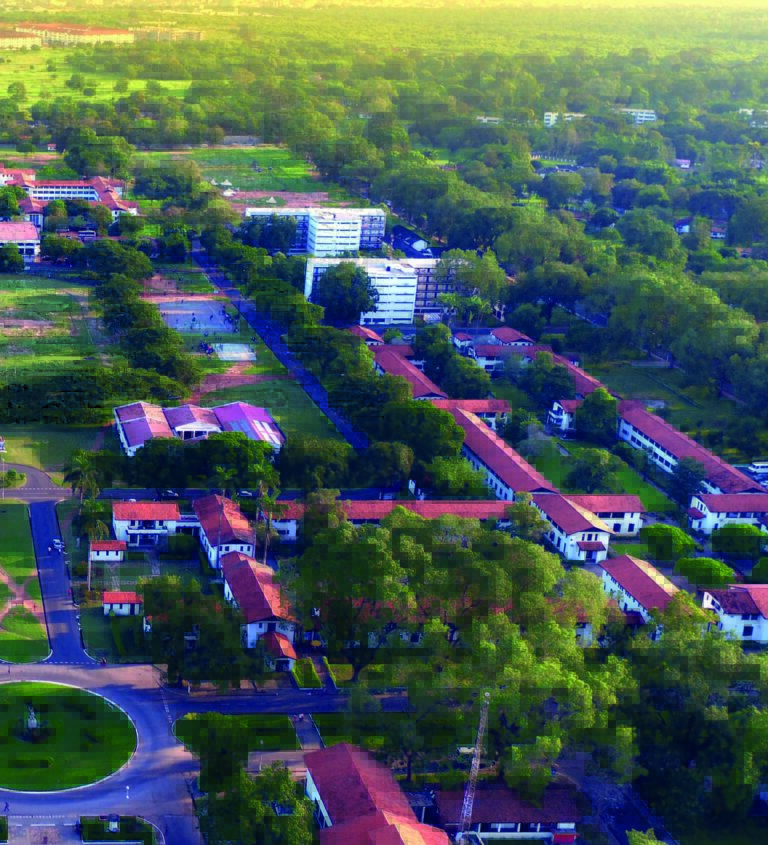
The University of Port Harcourt was established in 1975 and is located in the East-West Road area of Port Harcourt, Rivers State. From its founding, UNIPORT has grown into one of Nigeria’s most comprehensive federal universities, with a large campus that houses multiple faculties, an institute of petroleum studies, a teaching hospital, research centres, and a student population that runs into the tens of thousands. The university’s federal status means it draws students from every state in Nigeria, giving it a culturally diverse campus community that is one of its most enriching features.
Faculties and Courses at UNIPORT
UNIPORT organises its academic programmes across fourteen faculties each offering degree programmes that are accredited by the National Universities Commission and relevant professional regulatory bodies.
The Faculty of Agriculture covers Agricultural Economics and Extension, Animal Science and Fisheries, Crop and Soil Science, and Forestry and Environment. Agriculture at UNIPORT has a practical orientation shaped by the agricultural potential of Rivers State and the broader South-South delta region.
The Faculty of Basic Medical Sciences and the Faculty of Clinical Sciences together form UNIPORT’s medical education complex. Basic Medical Sciences covers Anatomy, Biochemistry, and Physiology while Clinical Sciences covers Medicine and Surgery and the associated clinical specialisations. The University of Port Harcourt Teaching Hospital provides the clinical training environment and is one of the major healthcare institutions in the South-South.
The Faculty of Dentistry offers the BDS programme and is one of the small number of Nigerian universities that offers a formal dentistry degree programme.
The Faculty of Education covers Adult and Non-Formal Education, Educational Foundations, Educational Management, Human Kinetics and Health Education, and Science Education. Education graduates from UNIPORT serve the teaching and educational administration needs of Rivers State and the South-South region.
The Faculty of Engineering is one of the most prominent faculties at UNIPORT and reflects the university’s location in Nigeria’s oil and gas capital. It houses Chemical Engineering, Civil Engineering, Electrical Engineering, Marine Engineering, Mechanical Engineering, Petroleum and Gas Engineering, and Surveying and Geoinformatics. Petroleum Engineering at UNIPORT is particularly distinctive and draws candidates specifically because of its direct industry relevance in the South-South context.
The Faculty of Humanities covers Communication Arts, History and Diplomatic Studies, Linguistics and Communication Studies, Philosophy, and Religious and Cultural Studies. This faculty provides a humanistic education that complements the strongly technical orientation of much of UNIPORT’s other academic offerings.
The Faculty of Law offers the LLB programme and is consistently one of the more competitive faculties at UNIPORT. Law graduates proceed to the Nigerian Law School and then into legal practice, the judiciary, and corporate law roles.
The Faculty of Management Sciences covers Accounting, Banking and Finance, Business Administration, Hospitality Management and Tourism, Insurance and Actuarial Science, and Marketing. Management Sciences at UNIPORT serves the significant business and financial sector of Port Harcourt and the broader South-South economy.
The Faculty of Pharmacy offers the B.Pharm degree and is highly competitive as pharmacy programmes are across most Nigerian federal universities.
The Faculty of Science covers Biochemistry, Chemistry, Computer Science, Geology, Mathematics and Statistics, Microbiology, Physics, and Zoology. Geology at UNIPORT is particularly noteworthy given the region’s oil and gas geology and the career opportunities this creates for geology graduates in the petroleum industry.
The Faculty of Social Sciences houses Economics, Political and Administrative Studies, Psychology, and Sociology. Economics and Political Science at UNIPORT have produced many of the South-South’s most prominent public intellectuals, politicians, and policy analysts.
| Faculty | Key Courses |
|---|---|
| Engineering | Petroleum Engineering, Chemical, Civil, Electrical, Mechanical, Marine Engineering |
| Clinical Sciences / Basic Medical Sciences | Medicine and Surgery, Anatomy, Biochemistry, Physiology |
| Science | Geology, Computer Science, Chemistry, Mathematics, Microbiology, Physics |
| Management Sciences | Accounting, Banking and Finance, Business Administration, Marketing, Hospitality Management |
| Law | Law (LLB) |
| Pharmacy | Pharmacy (B.Pharm) |
| Social Sciences | Economics, Political Science, Psychology, Sociology |
| Humanities | Communication Arts, History, Linguistics, Philosophy, Religious Studies |
UNIPORT Cut Off Mark for 2026
The general JAMB cut off mark for UNIPORT is 180 for most programmes. Candidates who scored below 180 are not eligible for consideration through the regular UTME admission route. For competitive programmes like Medicine, Petroleum Engineering, Pharmacy, Law, and Computer Science, the effective aggregate score required for admission is substantially higher than the general minimum. Candidates should research the typical aggregate scores for their specific course rather than assuming that meeting the minimum cut off is sufficient for admission.
UNIPORT Post UTME
UNIPORT conducts Post UTME screening that is compulsory for all eligible UTME candidates. The screening is Computer Based and tests candidates in their four JAMB subject areas within a time window of approximately 30 to 45 minutes. Registration is done through the UNIPORT Post UTME portal and candidates receive their screening date, time, and venue details after completing registration. The Post UTME score is combined with the JAMB score using the standard aggregate formula to produce the final admission score.
Industry Advantage: Studying in Nigeria’s Oil and Gas Capital
One of UNIPORT’s most significant but often underexplored advantages is its location in Port Harcourt — the operational heart of Nigeria’s oil and gas industry. For students in certain faculties, this is not just a geographical detail; it is a career advantage that can shape internship opportunities, professional exposure, and long-term employment prospects.
Engineering students, particularly those in Petroleum, Chemical, Mechanical, and Marine Engineering, benefit directly from proximity to oil servicing companies, fabrication yards, and multinational energy firms operating in the region. While securing placements still requires initiative, students at UNIPORT are physically closer to the industries they aim to enter than their counterparts in many other universities.
Geology students also benefit from this location. The Niger Delta region provides a living laboratory for sedimentary basin studies, petroleum geology, and environmental impact research. Field trips, industrial training, and research projects often draw directly from the surrounding environment in ways that are difficult to replicate elsewhere.
Even outside engineering and geosciences, the city’s economy creates opportunities. Management Sciences students find internship placements in banks, logistics companies, hospitality businesses, and oil servicing firms. Students in Communication Arts and the humanities can engage with media organisations, NGOs, and corporate communications units tied to the region’s economic activity.
That said, this advantage is not automatic. UNIPORT does not “hand out” industry connections — students who benefit most are those who actively seek internships, build networks, and develop practical skills alongside their academic work. The opportunity exists, but it rewards initiative.
For students who are strategic about their careers, studying at UNIPORT means being positioned at the centre of one of Nigeria’s most economically important regions — a factor that can make a meaningful difference after graduation.
UNIPORT School Fees and Hostel
As a federal university, UNIPORT school fees are regulated and are more affordable than private university fees. The fee schedule varies by faculty and is published on the university portal at the beginning of each session. Medical and engineering programmes carry higher fees than arts and education programmes. Hostel accommodation is available on campus though spaces are limited relative to the student population. Off-campus accommodation options exist in the Port Harcourt neighbourhoods surrounding the university.
Who Should Consider UNIPORT — And Who Should Think Twice?
Choosing a university is not just about rankings or reputation — it is about fit. The University of Port Harcourt offers strong academic programmes and a strategic location, but it suits certain types of students better than others.
UNIPORT is a strong choice for students who are career-focused and willing to take initiative. The university provides access to opportunities, especially in engineering, sciences, and management, but it does not structure those opportunities for you. Students who succeed here are typically those who actively seek internships, build practical skills, and think ahead about their career paths from early in their programme.
It is also well-suited for students who are comfortable in a large, busy university environment. With a sizable student population and a broad range of faculties, UNIPORT offers diversity and exposure but it also requires independence. Students who expect close supervision or highly structured academic support may find the environment challenging.
On the other hand, students who prefer quieter, smaller campuses with more personalised attention might need to think carefully. UNIPORT’s scale means that in some courses, especially at the introductory level, lecture halls can be crowded and students must take responsibility for keeping up academically.
Location is another factor to consider realistically. Port Harcourt is economically vibrant but also comes with the realities of a major Nigerian city — cost of living, transportation, and environmental factors. Students who are adaptable and able to navigate city life tend to adjust more easily than those who are not.
Ultimately, UNIPORT rewards students who are proactive, resilient, and clear about their goals. For that kind of student, it is not just a place to earn a degree — it is a platform to build a career.
UNIPORT Admission Requirements
- Minimum JAMB score of 180 for most programmes
- Five O’Level credits including English Language from WAEC, NECO, or NABTEB in not more than two sittings
- Mathematics required at credit level for Engineering, Science, and Management programmes
- Compulsory Post UTME screening for all eligible candidates
- Acceptance fee payment within the deadline upon receiving an admission offer
Official programme details, admission guidelines, and university announcements are available at www.uniport.edu.ng.