University of Ilorin (UNILORIN) Courses, Admission, Cut Off Mark, School Fees and Student Guide
The University of Ilorin sits at a crossroads literally and figuratively. Geographically, Ilorin occupies the junction between Nigeria’s predominantly Muslim North and predominantly Christian South, a position that has given the city a distinctive cultural character that is reflected in its university. Academically, UNILORIN has positioned itself at the intersection of research excellence and practical education, building a reputation over decades as one of the most disciplined and consistently well-managed federal universities in Nigeria. For candidates choosing their university in 2026, understanding what makes UNILORIN distinctive — and what admission to it actually requires is the purpose of this guide.
University of Ilorin: Foundation and Growth
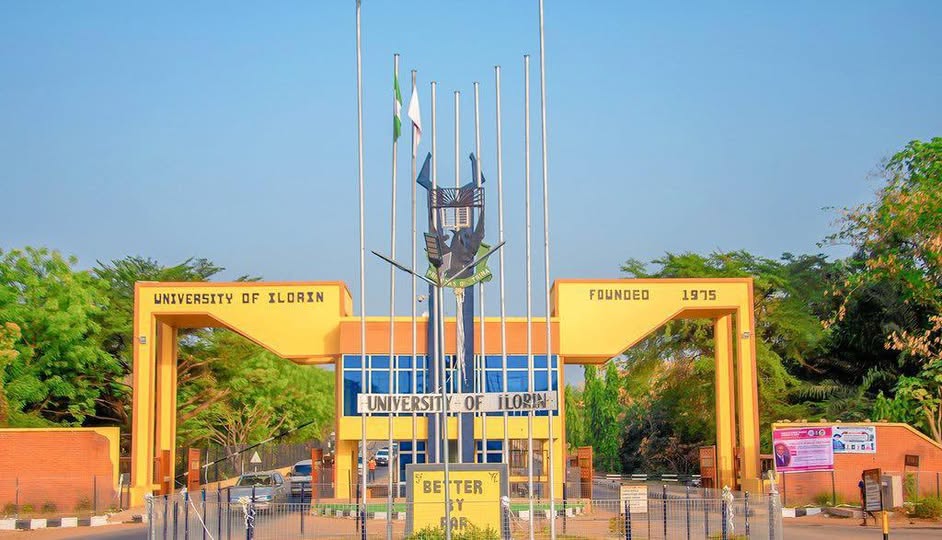
The University of Ilorin was established in 1975 as part of the federal government’s third-phase university expansion programme of the 1970s. It began operations on the outskirts of Ilorin, the capital of Kwara State, on a campus that has since grown substantially in both physical extent and academic scope. What started as a modest institution with a few faculties has evolved into one of the largest and most comprehensive federal universities in Nigeria.
UNILORIN is consistently ranked among the top universities in Nigeria and the continent. Its strong performance in academic rankings reflects a sustained commitment to research output, accreditation quality, and teaching standards. The university has a particularly strong reputation in the sciences, medicine, and engineering, though its humanities, social sciences, and law faculties are also well-regarded.
Faculties and Courses at UNILORIN
UNILORIN operates through fifteen faculties that together cover one of the broadest academic ranges of any Nigerian federal university.
The Faculty of Agriculture covers Animal Production, Crop Production, Food Science and Technology, and Soil Science. Agricultural research at UNILORIN has contributed to the body of knowledge on farming systems relevant to the North-Central ecological zone.
The Faculty of Arts houses Arabic and Islamic Studies, English Language and Literature, European Languages, History and International Studies, Linguistics, and Performing Arts. The Arabic and Islamic Studies programme at UNILORIN is particularly strong given Ilorin’s significant Muslim population and its historical importance as a centre of Islamic scholarship in West Africa.
The Faculty of Business and Social Sciences covers Accounting, Banking and Finance, Business Administration, Economics, Finance, Geography and Environmental Management, Insurance, Political Science, Psychology, Sociology, and Statistics. This broad faculty serves the management and social science needs of a diverse student population and produces graduates who enter banking, consulting, public service, research, and academia.
The Faculty of Communication and Information Sciences covers Information and Communication Science, Library and Information Science, and Mass Communication. Mass Communication at UNILORIN has produced many prominent figures in Nigerian media and the programme is consistently competitive.
The Faculty of Education trains teachers and educational administrators across multiple specialisations including Adult Education, Counsellor Education, Educational Administration and Planning, Human Kinetics, Library and Information Science Education, and Science Education.
The Faculty of Engineering and Technology is one of the most respected engineering faculties in Nigeria. It covers Agricultural Engineering, Biochemical Engineering, Chemical Engineering, Civil Engineering, Computer Engineering, Electrical and Electronics Engineering, Food Engineering, Mechanical Engineering, Mechatronics Engineering, and Materials and Metallurgical Engineering. The breadth and depth of UNILORIN’s engineering programmes are among the strongest arguments for choosing this institution for a technical degree.
The Faculty of Environmental Sciences covers Architecture, Building Technology, Estate Management, Fine and Applied Arts, Quantity Surveying, and Urban and Regional Planning.
The Faculty of Law is consistently one of the most competitive faculties at UNILORIN. Law graduates from the university have gone on to prominent careers in the Nigerian legal profession, the judiciary, and academia.
The Faculty of Life Sciences covers Biochemistry, Microbiology, Plant Biology, and Zoology. This faculty bridges the pure sciences and the applied biological sciences and provides preparation for careers in research, healthcare, and the biotechnology sector.
The Faculty of Pharmaceutical Sciences offers the B.Pharm degree. Pharmacy at UNILORIN is highly competitive and requires strong aggregate scores for admission.
The Faculty of Physical Sciences houses Chemistry, Computer Science, Geology and Mineral Sciences, Mathematics, and Physics. Computer Science at UNILORIN has grown significantly in both applicant demand and in the quality of its graduates entering the technology sector.
The Faculty of Social Sciences operates alongside the Faculty of Business and Social Sciences and covers core social science disciplines.
The Faculty of Veterinary Medicine offers the DVM programme and is one of the few veterinary medicine programmes available at a Nigerian university. The five-year programme is highly competitive and produces graduates who practice in clinical veterinary medicine, animal health research, and public health.
The College of Health Sciences and the associated faculties of Basic Clinical Sciences and Clinical Sciences cover Medicine and Surgery and related health programmes. UNILORIN Teaching Hospital provides the clinical training environment for medical students and serves as a major healthcare facility for the Ilorin region.
The Faculty of Nursing Sciences offers the Nursing Science degree. Nursing at UNILORIN is highly sought after and consistently one of the most competitive undergraduate programmes in the university.
| Faculty | Key Programmes |
|---|---|
| Engineering and Technology | Chemical, Civil, Computer, Electrical, Mechanical, Mechatronics Engineering |
| Clinical Sciences / Health Sciences | Medicine and Surgery, Nursing Science |
| Pharmaceutical Sciences | Pharmacy (B.Pharm) |
| Law | Law (LLB) |
| Business and Social Sciences | Accounting, Banking and Finance, Business Administration, Economics, Political Science |
| Physical Sciences | Computer Science, Chemistry, Mathematics, Geology, Physics |
| Arts | English, Arabic and Islamic Studies, History, Linguistics, Performing Arts |
| Veterinary Medicine | Veterinary Medicine (DVM) |
UNILORIN Cut Off Mark for 2026
The general JAMB cut off mark for UNILORIN is 200. This applies across all programmes and candidates who scored below 200 are not eligible for UTME admission. For competitive programmes — Medicine, Nursing, Pharmacy, Veterinary Medicine, Law, Computer Science, and Engineering — the effective aggregate scores required for admission are substantially above the general minimum. UNILORIN is a competitive institution across the board and candidates should aim for aggregate scores well above the minimum to have realistic admission prospects.
Why UNILORIN Has One of the Most Stable Academic Calendars in Nigeria
One of the most talked-about advantages of the University of Ilorin is its reputation for maintaining an unusually stable academic calendar compared to many other Nigerian universities. While interruptions do occur in the broader university system nationwide, UNILORIN has built a long-standing institutional culture that prioritises continuity of academic activities.
This stability is not accidental. It is the result of administrative policies that place strict emphasis on punctual resumption, consistent examination schedules, and structured academic planning. Over time, this approach has helped the university avoid prolonged disruptions that can delay graduation timelines in other institutions.
For students, this consistency has practical benefits. It allows better planning of academic years, internships, industrial training, and graduation timelines. Final-year students, in particular, benefit from the predictability when applying for postgraduate studies, jobs, or professional certifications that depend on timely graduation.
However, this structure also comes with expectations. Students are required to adapt quickly to fixed academic schedules, strict deadlines, and continuous assessment patterns. There is limited flexibility for those who struggle with time management or prefer a more relaxed academic rhythm.
For many candidates, this stability is one of the strongest reasons UNILORIN remains a top choice. It offers something that is not always guaranteed in the Nigerian university system — a clear, uninterrupted path from admission to graduation.
UNILORIN Post UTME
UNILORIN conducts Post UTME screening that is compulsory for all eligible UTME candidates. The Post UTME is Computer Based and tests candidates in the four subjects of their JAMB registration. The exam typically runs for 30 to 45 minutes and questions cover the full breadth of the JAMB syllabus for each subject. Registration is done through the UNILORIN Post UTME registration portal and candidates receive their screening date and venue through their candidate dashboard after completing registration and paying the screening fee.
The UNILORIN aggregate is calculated by dividing the JAMB score by 8 for a figure out of 50 and dividing the Post UTME score by 2 for another figure out of 50. Both are added to give the aggregate out of 100. This equal weighting of JAMB and Post UTME means that thorough Post UTME preparation is as important as the original JAMB performance.
UNILORIN School Fees in 2026
As a federal university, UNILORIN school fees are regulated and represent one of the most affordable routes to a quality university education in Nigeria. Fee levels vary by faculty and are updated periodically. Medical, pharmacy, veterinary, and engineering programmes carry higher fees than arts, education, and social science programmes. The complete fee schedule for each faculty is published on the university portal at the beginning of each session. Fresh students pay a combination of acceptance fees, first-year tuition, and other institutional charges upon reporting for registration.
UNILORIN Hostel and Campus Life
The UNILORIN campus in Ilorin is large, well-planned, and reasonably well-equipped. On-campus hostels accommodate a portion of the student population with the remainder living in off-campus accommodation in the surrounding Ilorin neighbourhoods. Ilorin is a city with a relatively affordable cost of living compared to Lagos, Abuja, or Port Harcourt, which makes off-campus student life financially more manageable at UNILORIN than at many other federal universities.
Campus life at UNILORIN includes a large range of student organisations including departmental associations, religious bodies, cultural groups, and professional student clubs. The university’s relatively disciplined institutional culture means that academic activities tend to be prioritised over social disruptions — a characteristic that some students appreciate and others find constraining.
UNILORIN Admission Requirements
- Minimum JAMB score of 200 for all programmes
- Five O’Level credits including English Language from WAEC, NECO, or NABTEB in not more than two sittings
- Mathematics required at credit level for Engineering, Science, Business, and Social Science programmes
- Compulsory Post UTME screening for all eligible UTME candidates
- Acceptance fee payment within the stated deadline upon receiving an admission offer
Full programme information, admission guidelines, and official updates are available at the University of Ilorin’s official website at www.unilorin.edu.ng.