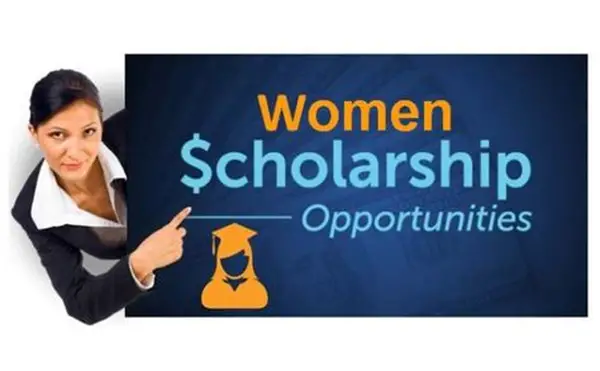
Fully Funded Scholarships for Women 2026 – Best International Awards for Female Students
Fully Funded Scholarships Specifically for Women Exist at Every Level and in Every Major Study Destination
Gender-targeted scholarship programmes have grown significantly over the past decade. Where once they were niche exceptions, funded female scholarships now represent a mainstream strategy across government scholarship bodies, university endowments, corporate foundations, and international development organisations.
The reason is well documented. Women remain underrepresented in certain STEM fields globally. Women from developing countries face compounded barriers to accessing international education. And evidence consistently shows that education for women generates disproportionate development returns for families, communities, and entire economies.
The practical implication for women currently building their scholarship application lists is this: alongside general scholarship competitions where you compete with everyone, there is a parallel landscape of awards where you compete only with women, or where being a woman significantly improves your eligibility and your score.
This guide covers the best fully funded scholarships for women in 2026 across different countries, fields, and degree levels.
Schlumberger Foundation Faculty for the Future Fellowship
This is one of the most financially substantial and widely applicable scholarships available specifically to women from developing countries pursuing advanced study in STEM fields.
Who runs it: The Schlumberger Foundation, the philanthropic arm of SLB (formerly Schlumberger), the global energy technology company.
Target applicant: Women from developing and emerging economies who are in the final stages of their PhD or who are undertaking postdoctoral research in STEM fields and who are currently employed at a university or research institution in their home country.
What it covers:
- A grant toward tuition fees at a university abroad
- A living stipend
- Research-related expenses
- Travel costs
Amount: Up to USD 50,000 per year (USD 40,000 for PhD candidates and up to USD 50,000 for postdoctoral researchers).
Key requirement: Applicants must be employed at a university or research institution in their developing country home and must commit to returning there after their fellowship period. The programme explicitly invests in women who will build STEM capacity within their home institutions, not women who intend to remain abroad permanently.
Strong fields for Faculty for the Future applicants: Physics, chemistry, mathematics, engineering, geoscience, computer science, biology, and related STEM disciplines.
Applications are submitted annually through the Schlumberger Foundation website with a deadline typically in mid-November.
L’Oreal-UNESCO For Women in Science International Awards
The L’Oreal-UNESCO For Women in Science programme operates at two levels: international awards for established women scientists, and international fellowships for early-career women researchers.
International Fellowships: Fifteen international fellowships of EUR 15,000 each are awarded annually to women PhD students or postdoctoral researchers from any country to spend a defined research period at an institution abroad. Applications are submitted through L’Oreal national programmes in each country.
Eligibility: Women enrolled in doctoral programmes or at early postdoctoral stage in life sciences, physical sciences, mathematics, computer science, or engineering.
Scholarships for African Women: The Leading Programmes
African Women in Agricultural Research and Development (AWARD) Fellowship
AWARD supports women agricultural scientists in sub-Saharan Africa to develop their research and leadership capacity. Fellows receive coaching, mentorship, and funding support for advanced training.
Target: Early-to-mid career African women working in agricultural research in sub-Saharan Africa.
Coverage: Tailored professional development support, mentorship, and training funding rather than a traditional degree scholarship.
Countries eligible: Ethiopia, Ghana, Kenya, Malawi, Mali, Mozambique, Nigeria, Rwanda, Tanzania, Uganda, and others. Check the AWARD website for current eligible countries.
Mastercard Foundation Scholars Program (Women)
While the Mastercard Foundation Scholars Program is not exclusively for women, women from sub-Saharan Africa are a priority demographic across all partner university programmes. The programme actively monitors gender equity in its scholar selections and women are typically well-represented among award recipients.
Beit Trust Scholarships for Women in Southern Africa
The Beit Trust provides master’s degree and PhD scholarships for students from Malawi, Zambia, and Zimbabwe, with a strong track record of supporting female scholars. Applications go through the Beit Trust office.
Scholarships for Women in STEM: International Programmes
Google Women Techmakers Scholars Program
Google’s Women Techmakers programme awards scholarships to women pursuing computer science, computer engineering, or closely related technology degrees at universities in the United States, Canada, and in expanding regions including sub-Saharan Africa.
Award amount: USD 10,000 in the United States; amounts vary by region.
What else is included: Beyond the financial award, scholars receive mentorship from Google engineers, access to leadership development resources, and community membership.
Eligibility: Women enrolled in bachelor’s, master’s, or doctoral programmes in computer science, computer engineering, or a related technical field.
Microsoft Research PhD Fellowship for Women
Microsoft Research awards PhD fellowships to outstanding women PhD students in North America working on research areas aligned with Microsoft’s research agenda, including AI, systems, theory, and human-computer interaction.
Palantir Women in Technology Scholarship
The Palantir Foundation awards scholarships to women studying computer science, engineering, or related technical fields, primarily but not exclusively at North American universities.
Government Scholarships Where Being a Woman Is an Advantage
Chevening and Commonwealth: No Gender Restriction but Strong Female Representation
While Chevening and Commonwealth Scholarships are not women-only, both programmes actively monitor and promote gender equity in their scholar cohorts. In many eligible countries, Chevening’s national advisory committees specifically encourage strong female candidates and in some countries allocate informal targets for women in the cohort.
Australia Awards: Priority for Gender Equity
Australia Awards programmes in several African and Asian countries explicitly list gender equity as a selection criterion, meaning women applicants from underrepresented backgrounds receive additional weighting in competitive assessment.
Swedish Institute Scholarship: Encourages Female Applicants
The Swedish Institute Scholarship for Global Professionals, which covers master’s study in Sweden for applicants from eligible developing countries, lists gender equality as a core Swedish value and actively encourages female candidates, particularly from fields where women are underrepresented.
University-Level Scholarships Specifically for Women
Fondation Egalite Hommes Femmes (Sciences Po, France)
Sciences Po Paris offers dedicated funding support for women from developing countries pursuing master’s degrees in areas connected to gender equality, governance, and international development.
University of Edinburgh Scholarships for Women from Developing Countries
The University of Edinburgh maintains specific scholarship funding streams for women from developing countries across multiple postgraduate programmes. Check the Edinburgh scholarship finder filtered by gender for current awards.
KU Leuven Scholarships for Women from Africa
KU Leuven in Belgium offers specific support through VLIR-UOS and institutional scholarships for women from sub-Saharan African eligible countries pursuing development-related master’s degrees.
How to Build a Strong Scholarship Application as a Female Applicant
Apply to Both General and Gender-Specific Awards Simultaneously
The most effective strategy is to apply to both general scholarship competitions (where you compete with all applicants) and gender-specific awards (where you compete primarily with other women) in the same cycle. This doubles your application portfolio without doubling the preparation workload, since many core documents are reusable across applications.
Address Gender Barriers in Your Personal Statement Where Relevant
For women from contexts where gender barriers to education or professional advancement are real and documented, describing these barriers authentically in your personal statement is appropriate and often expected by reviewers who evaluate applications with gender equity criteria.
Do not fabricate or exaggerate these barriers. Authentic experiences, including navigating male-dominated workplaces, accessing opportunities despite cultural expectations, or making choices that prioritised your career against social pressure, told specifically and honestly, are compelling parts of your narrative.
Reference Your Role as a Future Model and Mentor
Many women-focused scholarships are invested in creating visible role models for girls and younger women in their home countries and communities. If your plans after your studies include mentoring, teaching, community engagement, or creating visible representation for other women in your field, articulate this clearly.
2026 Trends in Scholarships for Women
One of the biggest shifts in 2026 scholarship funding is the increasing focus on women in emerging technologies such as artificial intelligence, climate science, data science, and renewable energy. Governments and private foundations are no longer only funding general gender equality programmes—they are strategically investing in women who can lead high-impact industries.
Another major trend is the rise of hybrid scholarship models. These combine full tuition coverage with leadership training, mentorship, and internship placements, ensuring that female scholars are not only educated but also positioned for career advancement immediately after graduation.
Tips to Improve Your Chances in Competitive Women’s Scholarships
Strong applications increasingly require more than academic excellence. Selection committees look for leadership potential, community impact, and long-term development goals. Women who demonstrate active involvement in community projects, mentoring, advocacy, or professional leadership roles often stand out.
Another important factor is clarity of purpose. Applicants who clearly connect their chosen field of study to a specific problem in their home country or region tend to score higher than those with general academic ambitions.
While women-only scholarships are powerful opportunities, the strongest strategy is always a mixed application approach. Successful candidates typically apply to multiple categories at oncewomen-focused scholarships, merit-based international scholarships, and government-funded programmes—to maximize their chances of securing funding.
Frequently Asked Questions About Scholarships for Women 2026
Are there fully funded scholarships for women from Nigeria or Ghana?
Yes. The AWARD Fellowship, Mastercard Foundation Scholars Program, Faculty for the Future, Google Women Techmakers, and various country-specific Chevening and Commonwealth scholarship cohorts are all accessible to Nigerian and Ghanaian women. VLIR-UOS in Belgium includes specific eligible African countries.
What field of study has the most scholarships for women?
STEM fields (science, technology, engineering, mathematics) have the largest number of dedicated women’s scholarship programmes globally, driven by underrepresentation data. However, development, public health, governance, and education also have significant gender-targeted funding.
Can men apply for scholarships described as for women?
No. Scholarships specifically designated for women are restricted to female applicants. General scholarships that encourage female applicants are open to everyone but provide additional consideration for women in their assessment.
Is there an age limit for women’s scholarships?
Each programme has its own age criteria. Faculty for the Future does not apply a strict age limit. Google Women Techmakers targets students currently enrolled in degree programmes. Most government scholarships apply standard age limits that apply equally to all applicants regardless of gender.