State Universities in Nigeria 2026: Admission Requirements, Courses Offered
State Universities in Nigeria: Courses, Admission and What to Expect
State universities occupy a crucial middle ground in Nigeria’s tertiary education landscape. They are established and funded by state governments, supervised by the National Universities Commission, and offer degree programmes that are fully recognised for all professional and academic purposes. For many Nigerian students, a state university represents the practical combination of affordability, academic quality, and proximity to home that makes tertiary education accessible without the intense competition that characterises federal university admissions.
There are over 50 state universities currently operational across Nigeria and while they vary considerably in size, infrastructure, and academic breadth, several have developed strong reputations that extend well beyond their host states. This guide examines some of the most prominent state universities in Nigeria, covering their academic offerings, admission requirements, notable strengths, and what prospective students should know before applying.
1. Lagos State University (LASU) Lagos State
Lagos State University is one of the largest and most well-known state universities in Nigeria. Established in 1983 by the Lagos State government, LASU operates primarily from its main campus in Ojo, Lagos, with additional learning centres across the state. The university serves a massive student population and benefits from its location in Nigeria’s most economically active state.
LASU’s faculties span Arts, Education, Engineering, Environmental Sciences, Law, Management Sciences, Science, and Social Sciences. The university also has a College of Medicine affiliated with a teaching hospital in Ikeja. Popular programmes at LASU include Law, Computer Science, Electrical Engineering, Architecture, Mass Communication, Accounting, Economics, Business Administration, Biology, Chemistry, Physics, and Public Administration.
As a state university, LASU’s school fees are higher than those of federal universities but remain lower than most private institutions. The exact fee schedule varies by faculty and indigene status, with Lagos State indigenes paying subsidised rates compared to non-indigene students. The university accepts candidates who score a minimum of 180 on JAMB. Post UTME screening is compulsory for eligible candidates.
LASU has invested significantly in campus infrastructure over recent years and the Ojo campus now features modern lecture halls, laboratories, and student facilities. The university is frequently compared to UNILAG given their shared Lagos location, though LASU typically offers more accessible admission terms for students with mid-range JAMB scores.
Location: Ojo, Lagos State
Year Established: 1983
Minimum JAMB Cut-Off: 180
Official Website: www.lasu.edu.ng
2. Ekiti State University (EKSU) Ekiti State
Ekiti State University in Ado-Ekiti is one of the flagship state universities in the South-West geopolitical zone. The institution traces its origins to 1982 when it was established as a satellite campus of the University of Ife. It has since evolved into a fully independent state university with a growing portfolio of academic programmes and a steadily improving campus infrastructure.
EKSU’s faculties include Agriculture, Arts, Education, Engineering and Technology, Environmental Sciences, Law, Management Sciences, Science, Social Sciences, and a College of Medicine. The university offers undergraduate programmes in areas including Law, Computer Science, Electrical Engineering, Civil Engineering, Accounting, Mass Communication, Economics, Chemistry, Biology, Physics, Business Administration, and English and Literary Studies.
EKSU uses an O’Level-based screening approach where a candidate’s JAMB score and O’Level grades are the primary admission determinants. The general minimum JAMB cut-off for EKSU is 160. The university releases admission in batches and candidates who do not receive an offer in the first batch should continue monitoring the admission portal for subsequent releases. EKSU’s aggregate calculation gives meaningful weight to O’Level grades which means strong secondary school results can be a differentiating factor even for candidates with comparable JAMB scores.
EKSU has faced the typical funding challenges associated with state universities in Nigeria but has made visible progress in programme accreditation and campus development. It is often compared to FUOYE, the other major university in Ekiti State, with the two institutions serving complementary roles in the state’s educational ecosystem.
Location: Ado-Ekiti, Ekiti State
Year Established: 1982
Minimum JAMB Cut-Off: 160
Official Website: www.eksu.edu.ng
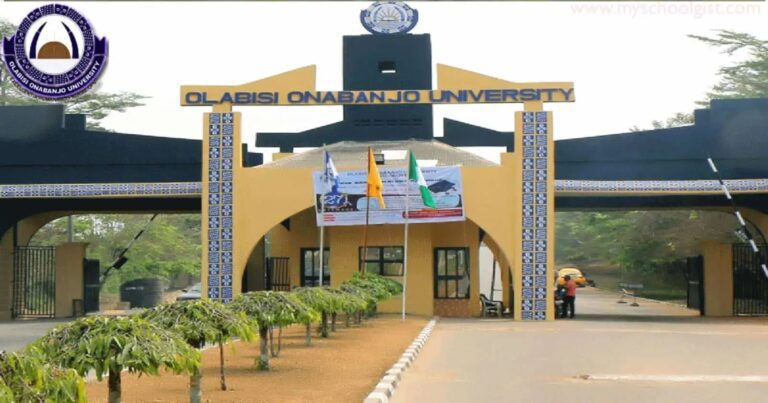
3. Olabisi Onabanjo University (OOU) Ogun State
Olabisi Onabanjo University, originally established as Ogun State University in 1982 and renamed in 2001 in honour of the former governor of Ogun State, is one of the South-West’s established state universities. OOU operates across multiple campuses in Ogun State including the main campus in Ago-Iwoye, the Sagamu campus which houses the College of Health Sciences, and other affiliated centres.
The university’s faculties include Agriculture, Basic Medical Sciences, Clinical Sciences, Education, Engineering and Environmental Studies, Law, Management Sciences, Pharmacy, Science, and Social Sciences. OOU is particularly noted for its health sciences programmes, especially Nursing Science, and its College of Health Sciences in Sagamu is one of the more recognised medical training facilities among state universities in South-West Nigeria.
Popular courses at OOU include Nursing Science, Medicine and Surgery, Pharmacy, Law, Computer Science, Electrical Engineering, Civil Engineering, Mass Communication, Accounting, Economics, and Biology. The university’s JAMB minimum cut-off is 160 and Post UTME screening is conducted for eligible candidates. OOU uses a composite scoring system that factors both JAMB performance and Post UTME results into the admission decision.
OOU’s multi-campus structure means that students in different faculties may have quite different campus experiences. Students in the health sciences at Sagamu operate in a hospital-adjacent environment while those at the Ago-Iwoye main campus have a more traditional university setting. Both campuses have student accommodation though demand typically exceeds supply during peak periods.
Location: Ago-Iwoye, Ogun State (Main Campus)
Year Established: 1982
Minimum JAMB Cut-Off: 160
Official Website: www.oouagoiwoye.edu.ng
4. Kwara State University (KWASU) Kwara State
Kwara State University is one of Nigeria’s newer state universities, having been established in 2009 in Malete, Kwara State. Despite its relative youth, KWASU has built a reputation for structured academic delivery, strong management, and a commitment to producing graduates who are equipped for practical professional challenges. The university benefits from a modern campus infrastructure that was purpose-built rather than adapted from older facilities.
KWASU operates through faculties including Agriculture, Arts and Islamic Studies, Communication and Information Sciences, Education, Engineering and Technology, Environmental Sciences, Law, Management Sciences, Natural Sciences, and Social Sciences. The university places emphasis on entrepreneurship and innovation as part of its academic philosophy, encouraging students to develop practical skills alongside their theoretical knowledge.
Popular programmes at KWASU include Law, Computer Science, Mass Communication, Accounting, Economics, Business Administration, Civil Engineering, Electrical Engineering, Biology, Chemistry, Physics, English and Literary Studies, and Islamic Studies. The university’s minimum JAMB cut-off is 160. KWASU accepts both first-choice and second-choice candidates subject to available spaces after the first-choice round. The university’s screening process may vary between document review and a formal Post UTME examination depending on the session.
KWASU’s location in Malete gives it a peaceful campus environment with relatively low distraction. The university provides on-campus accommodation for students though off-campus options are also available in surrounding communities. The university has been expanding its postgraduate offerings and now runs Masters and PhD programmes in select disciplines.
Location: Malete, Kwara State
Year Established: 2009
Minimum JAMB Cut-Off: 160
Official Website: www.kwasu.edu.ng
5. Rivers State University (RSU) Rivers State
Rivers State University in Port Harcourt is the state government’s premier university and one of the most developed state universities in the South-South region. Originally established in 1980 as the Rivers State University of Science and Technology, RSU has since expanded its scope beyond the sciences and technology to offer a wide range of social science, management, arts, and law programmes.
RSU’s schools and faculties include Agriculture, Education, Engineering, Environmental Sciences, Law, Management Sciences, Science, Social Sciences, and Technical and Science Education. Engineering programmes at RSU are particularly well regarded given the university’s historical emphasis on science and technology and its proximity to the oil and gas industry hub of Port Harcourt.
Top courses at RSU include Petroleum Engineering, Chemical Engineering, Electrical Engineering, Computer Science, Architecture, Law, Mass Communication, Accounting, Economics, and Biochemistry. The minimum JAMB cut-off for RSU is 160. Post UTME screening is conducted for eligible candidates and the admission process is managed through the university’s online portal.
RSU benefits from significant state government investment in its infrastructure and the Port Harcourt campus is one of the better-equipped state university campuses in the region. The university has a teaching hospital affiliation that supports its health science programmes and has been progressively expanding its postgraduate research capacity.
Location: Port Harcourt, Rivers State
Year Established: 1980
Minimum JAMB Cut-Off: 160
Official Website: www.rsu.edu.ng
6. Osun State University (UNIOSUN) Osun State
Osun State University is a unique state university in Nigeria because of its multi-campus model. Established in 2006, UNIOSUN distributes its faculties across six campuses located in different towns across Osun State including Osogbo, Ifetedo, Ejigbo, Ipetu-Ijesa, Ikire, and Okuku. Each campus specialises in specific academic disciplines which gives the university a distinctive decentralised structure.
The disciplines covered across UNIOSUN’s campuses include Agriculture and Food Sciences, Basic and Applied Sciences, Education, Health Sciences, Humanities and Culture, Law, Management and Social Sciences, and Engineering. This distributed model means that a student admitted to study Medicine at the Osogbo campus will have a different campus experience from one studying Agriculture at the Ejigbo campus.
Popular courses at UNIOSUN include Medicine and Surgery, Law, Computer Science, Nursing, Biochemistry, English, Mass Communication, Economics, and Agricultural Science. The university’s minimum JAMB cut-off is 160 and Post UTME screening is part of the admission process. UNIOSUN has been gaining ground in terms of programme accreditation and its health sciences programmes in particular have attracted growing interest from candidates in the South-West.
Location: Multiple campuses across Osun State (Main: Osogbo)
Year Established: 2006
Minimum JAMB Cut-Off: 160
Official Website: www.uniosun.edu.ng
7. Delta State University (DELSU) Delta State
Delta State University, commonly known as DELSU, is the flagship state university in Delta State. Established in 1992, the university operates across three campuses located in Abraka, Asaba, and Oleh. Each campus focuses on specific academic disciplines, with the Abraka campus serving as the main campus and the others hosting specialist programmes.
DELSU’s faculties include Agriculture, Arts, Basic Medical Sciences, Clinical Sciences, Education, Law, Management Sciences, Pharmacy, Science, and Social Sciences. The university is particularly noted in the South-South for its Faculty of Pharmacy and its Clinical Sciences programmes. Law at DELSU also attracts strong candidate interest each session.
Top programmes at DELSU include Pharmacy, Medicine and Surgery, Law, Computer Science, Chemistry, Biology, Accounting, Economics, Mass Communication, and English. The minimum JAMB cut-off for DELSU is 160. The Post UTME and admission process is managed through the university’s online portal. Admission is released in batches with candidates expected to monitor the portal regularly for updates.
Location: Abraka, Delta State (Main Campus)
Year Established: 1992
Minimum JAMB Cut-Off: 160
Official Website: www.delsu.edu.ng
What State University Admission Typically Looks Like
While there are differences between individual institutions, state university admissions in Nigeria follow a broadly similar pattern that prospective students should understand before beginning their application.
- Candidates must sit for JAMB and score at or above the institution’s published cut-off mark, which for most state universities falls between 160 and 180.
- O’Level credit requirements apply across all state universities. Five credits including English Language and Mathematics where relevant are the standard minimum in not more than two sittings.
- Many state universities weight O’Level grades directly in their admission scoring, meaning strong secondary school results can compensate partially for a lower JAMB score.
- School fees at state universities are higher than at federal universities. Non-indigene students typically pay significantly more than indigene students at the same institution.
- Acceptance fees must be paid within a stated deadline after receiving an admission offer. Missing this deadline usually forfeits the offer.
- Most state universities operate online portals for application, result checking, acceptance, and course registration. Candidates should ensure they have reliable internet access throughout the admission process.
Making the Right Choice Between State Universities
The decision between state universities should not be driven solely by which school is easiest to get into. Consider the accreditation status of the specific programme you intend to study, the quality of facilities in the relevant faculty, the institution’s track record of graduating students on time, and the economic and professional environment of the host state. A well-chosen state university can provide an excellent educational foundation that opens doors to postgraduate study, professional certification, and meaningful career opportunities both within Nigeria and beyond its borders.